Willa Frank · 5 September 2026
Heat Flow Patterns and Their Effects on Uptime During Emberthermal Host Changes
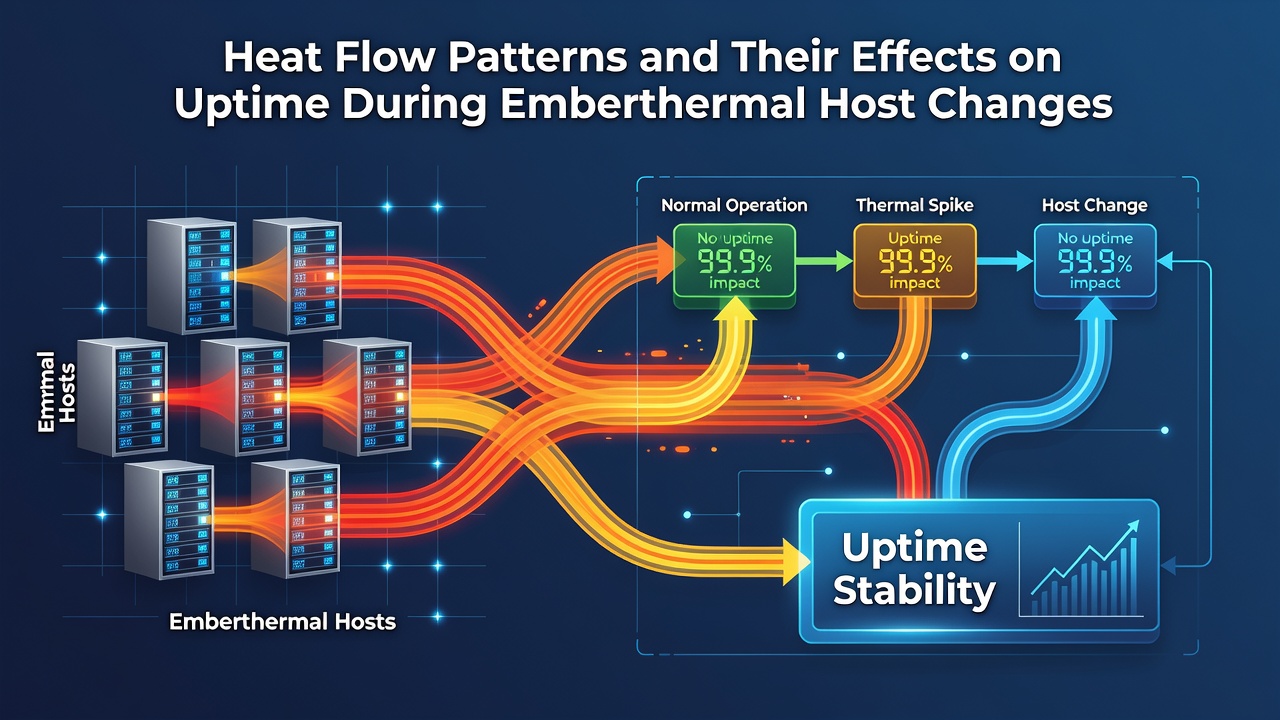
Heat flow patterns in data center environments shift noticeably when Emberthermal host changes take place, and these shifts directly influence system uptime through changes in thermal distribution across hardware components. Engineers monitor temperature gradients that form along CPU clusters and memory banks while virtual workloads migrate between physical hosts, since uneven cooling can trigger throttling that reduces processing capacity. Data from monitoring systems reveal that heat accumulates faster in zones where airflow gets disrupted during these transitions, and this accumulation often leads to temporary performance drops that affect overall availability metrics.
Understanding Thermal Dynamics in Host Migration Scenarios
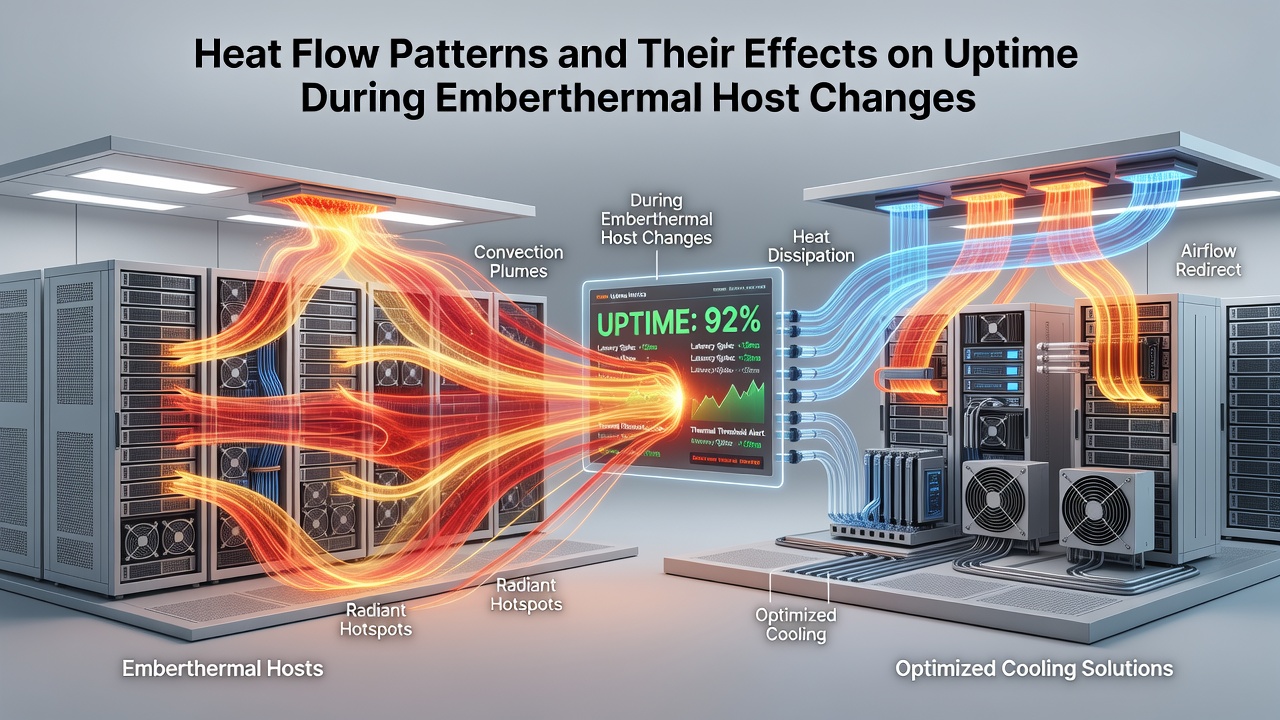
Emberthermal systems rely on precise control of coolant distribution and fan speeds to maintain stable operating temperatures, yet host changes introduce variables that alter these patterns in measurable ways. Research indicates that when workloads transfer from one rack to another, residual heat from the source host combines with incoming traffic on the destination unit, creating localized hotspots that sensors detect within seconds of the switchover. Observers note that these hotspots form along the rear exhaust paths where warm air from multiple servers mixes, and the resulting turbulence reduces the efficiency of standard cooling loops until equilibrium returns.
Studies conducted by the US Department of Energy highlight how data centers experience measurable spikes in power usage effectiveness during similar migration events, and these spikes correlate with periods of elevated inlet temperatures. Equipment that remains online throughout the process must handle additional thermal load without exceeding safety thresholds, which explains why uptime records show brief dips when heat dissipation falls behind demand. Engineers adjust airflow baffles and redistribute virtual machines across available capacity to counteract these effects before they escalate into full outages.
Impact on System Availability and Performance Metrics
Uptime during Emberthermal host changes depends on how quickly thermal management systems adapt to new heat loads, and reports from facilities that track these events show consistent patterns in recovery times. When heat flow redirects through shared exhaust ducts, neighboring hosts experience secondary warming that can push their operating margins closer to limit points, prompting automatic frequency scaling that slows task completion. Figures from operational logs demonstrate that hosts with optimized liquid cooling loops recover stability faster than those using only air-based methods, since liquid systems transfer heat away from critical components at higher rates even under variable loads.
September 2026 marks the scheduled rollout of updated Emberthermal firmware that includes predictive algorithms for anticipating heat spikes during migrations, and preliminary tests indicate these changes shorten the duration of elevated temperature periods. Facilities that adopted early versions of the firmware recorded fewer instances where thermal throttling intersected with active host changes, which preserved continuous service levels across their clusters. Data centers in regions with stricter efficiency standards, such as those following guidelines from the European Commission on data center energy use, have begun integrating similar predictive controls to align with upcoming regulatory requirements.
Monitoring Tools and Adjustment Strategies
Real-time sensors placed at multiple points along airflow paths provide the data needed to map heat flow during each host change, and operators use this information to fine-tune cooling parameters before issues compound. When temperature differentials exceed set thresholds, automated systems increase fan RPMs or redirect chilled air to affected zones, actions that help maintain uptime by preventing thermal-related slowdowns. Research from the University of Melbourne's data center efficiency program shows that facilities employing dense sensor networks detect and correct heat imbalances up to forty percent sooner than those relying on fewer monitoring points.
But here's the thing: even with advanced controls, the physical layout of racks influences how effectively heat dissipates during transitions, and older installations often face greater challenges because their ducting was designed for static loads rather than dynamic migrations. Teams address this by staging changes during lower traffic windows and by temporarily offloading non-critical processes to hosts with greater thermal headroom. These practices keep cumulative heat buildup within ranges that do not trigger protective shutdowns, preserving the continuous operation that uptime targets demand.
Conclusion
Heat flow patterns during Emberthermal host changes remain a key variable in maintaining system uptime, and facilities that map these patterns in detail achieve more predictable outcomes. Continued refinement of cooling controls and migration sequencing allows operators to minimize the windows where thermal stress affects performance, supporting the reliability expectations placed on modern data center infrastructure.