Jordan Fischer · 19 September 2026
Phase Transition Dynamics Shaping Resource Allocation in Dynamic Thermal Management Systems
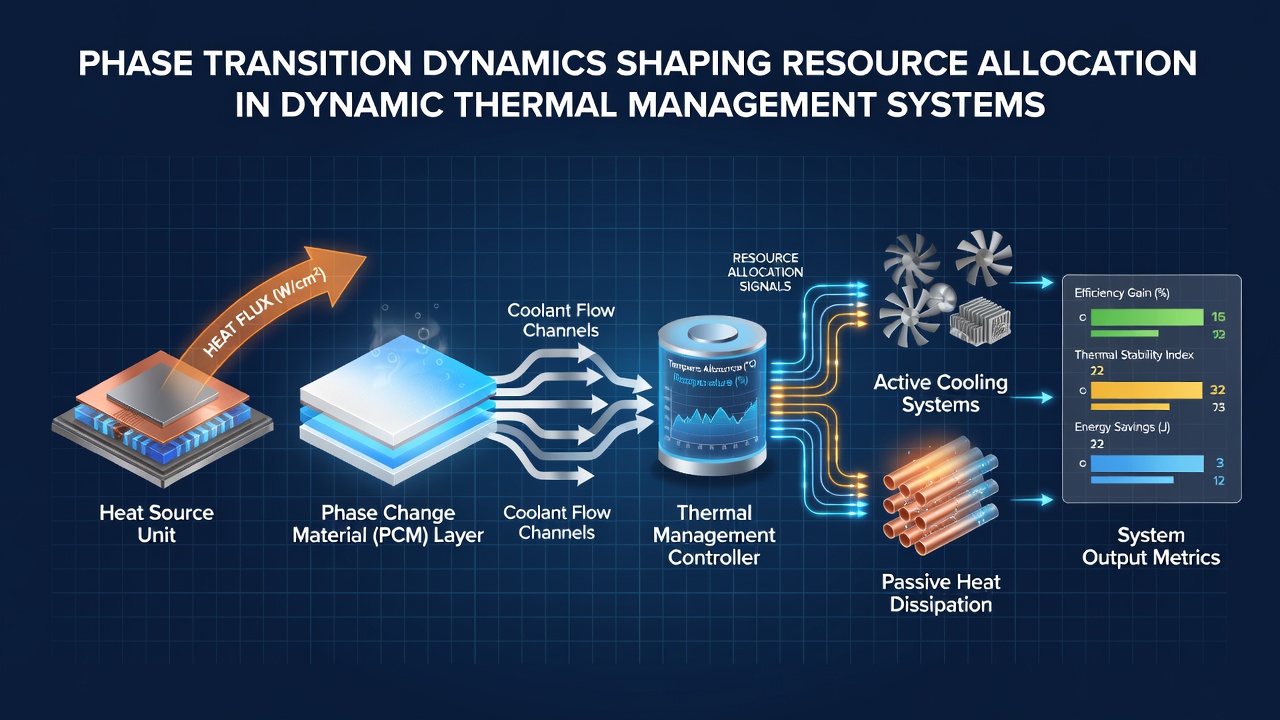
Phase transition dynamics play a central role in how dynamic thermal management systems distribute resources across computing hardware and cooling infrastructure. These systems rely on materials that shift between solid, liquid, and vapor states to absorb or release heat at specific temperature thresholds, which in turn influences decisions about power capping, workload migration, and fan speed adjustments. Engineers design the control algorithms to monitor these transitions in real time so that resource allocation remains balanced between performance targets and thermal limits.
Core Mechanisms of Phase Change in Thermal Regulation
Materials such as paraffin-based compounds and certain metal alloys undergo latent heat absorption during melting or vaporization, allowing them to stabilize component temperatures without continuous increases in coolant flow. Data from laboratory tests show that a single gram of phase-change material can absorb several hundred joules during a transition, reducing the immediate demand on active cooling pumps and compressors. Control software therefore treats these transitions as predictable events that free up allocation headroom for other subsystems, including voltage regulators and memory controllers.
Systems track transition onset through embedded sensors that measure both temperature gradients and acoustic signatures produced by bubble formation in two-phase coolants. When a transition begins, the management layer reallocates computational tasks away from affected zones to prevent overshoot, while simultaneously scaling back pump speeds to conserve energy. Observers note that this coordinated response prevents the rapid cycling that shortens equipment life and raises operational costs.
Resource Allocation Under Transition-Driven Constraints
Allocation policies must account for the hysteresis inherent in phase-change materials, where the temperature at which solidification occurs differs from the melting point. This difference creates a buffer zone that algorithms exploit to schedule maintenance windows or to shift high-intensity workloads. Research conducted at institutions across North America and the European Union demonstrates that incorporating hysteresis data into predictive models improves allocation efficiency by measurable margins during sustained loads.
Power distribution units receive updated setpoints once a transition completes, because the thermal capacitance of the system has effectively increased. Workload schedulers therefore receive signals that permit higher thread counts on processors that would otherwise trigger throttling. In large-scale deployments, these signals propagate through orchestration layers that also manage network bandwidth and storage I/O queues, ensuring that no single resource pool becomes a bottleneck after a cooling phase shift.
Integration with Broader System Architectures
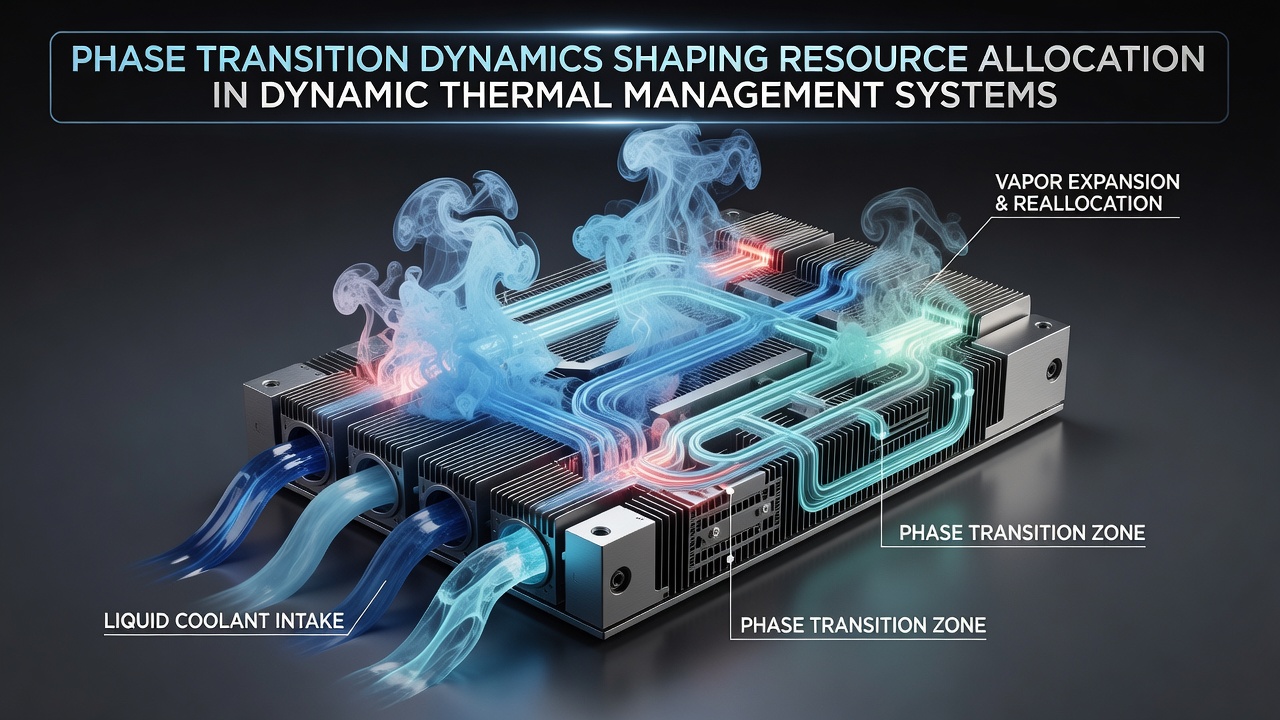
Modern data-center racks combine phase-change elements with liquid cooling loops and air-side economizers. The management software evaluates the state of each loop against real-time transition indicators before committing resources to any particular cooling circuit. When vaporization begins in a cold-plate assembly, the controller can divert a portion of the compute load to adjacent racks whose phase-change materials remain in a solid state, thereby equalizing thermal stress across the facility.
Standards organizations have begun publishing test protocols that require verification of allocation stability across multiple transition cycles. Facilities following these protocols report fewer unplanned shutdowns because the control logic anticipates the recovery time needed for materials to return to their original phase. Australian and Canadian research groups have contributed comparative datasets that highlight how regional climate conditions affect the frequency and duration of these cycles.
Measurement and Validation Approaches
Validation relies on high-resolution calorimetry combined with power telemetry at the server level. Engineers correlate spikes in latent-heat absorption with corresponding drops in allocated cooling power, confirming that the system responds as modeled. Continuous logging of transition events also feeds machine-learning models that refine allocation rules over successive quarters, incorporating seasonal variations in ambient conditions.
One study released in late 2025 examined facilities operating under updated firmware that explicitly tracks phase boundaries. The figures reveal tighter adherence to thermal design power limits and reduced variance in inlet temperatures after the firmware deployment. Such outcomes support further refinement of resource schedulers that treat phase transitions as first-class inputs rather than secondary effects.
Conclusion
Phase transition dynamics continue to shape the rules by which dynamic thermal management systems assign power, compute cycles, and cooling capacity. As sensor resolution improves and material formulations advance, allocation algorithms gain additional levers for maintaining stability under fluctuating loads. Facilities that integrate transition data into their control stacks achieve measurable consistency in both performance and energy metrics, demonstrating the practical value of treating these physical processes as core variables in system design.